
TMV2 valve servicing and replacement
TMV Servicing Specialists services, repairs and replaces TMV2 valves in homes, flats, HMOs and offices across the UK. TMV2 is the scheme for domestic-type settings, and the valves it covers protect baths, basins and showers from water hot enough to scald. A partner engineer checks the valve against the supply it is fitted on and leaves it set and tested.
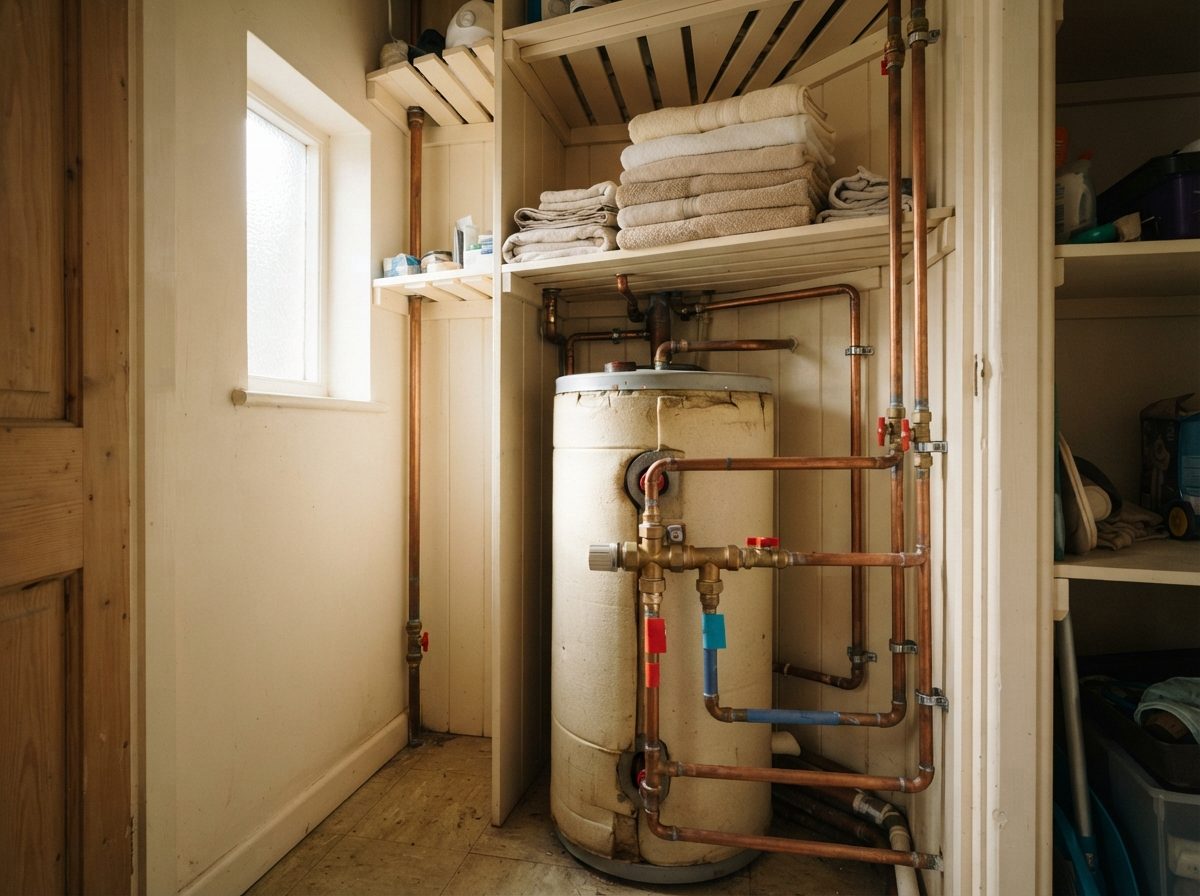
TMV2 valves: where they belong and what servicing involves
TMV2 is the approval scheme for thermostatic mixing valves used in domestic-type installations. A TMV2 valve has been tested against BS EN 1111 for high pressure supplies or BS EN 1287 for low pressure supplies, and some valves are tested to both. You find them under bath panels in new-build houses, in airing cupboards feeding a flat's bathroom, at basins in shared HMO kitchens and washrooms, and in staff toilets in offices. In many new homes the valve exists because Building Regulations Part G limits hot water to baths at 48°C.
Servicing a TMV2 valve means checking it still mixes to the right temperature, cleaning the strainers and check valves that stop scale and debris getting into the cartridge, checking it fails safe when one supply is lost, and resetting it where it has drifted. Hard water areas such as London, the South East and much of the Midlands scale TMV2 cartridges faster, so a bath valve that once held 46°C can creep or become sluggish. Where the cartridge or body is worn beyond servicing, a like-for-like replacement or a new valve suited to the supply is usually the sensible route.
This page is for TMV2 valves in homes, rented property and ordinary workplaces. If the building houses people at higher risk, such as a care home, hospital or clinic, the valves usually need TMV3 approval and a testing regime based on D 08, which is covered on the TMV3 valves page. If you are not sure what kind of valve you have, or whether you need one, a survey or the guide to TMV2 and TMV3 is a better starting point.
A TMV2 visit covers
What the engineer does depends on whether the valve is being serviced, repaired or swapped out, but a typical TMV2 visit includes:
- Identify the valve and supplyReading the valve markings, confirming TMV2 approval and checking whether the property runs on a combination boiler, unvented cylinder, gravity tank or mixed supply.
- Pressure matchChecking that a valve tested for high pressure is not struggling on a low pressure tank-fed system, or the other way round, which is a common cause of poor flow and unstable temperature.
- Before readingsMeasuring the mixed temperature at the outlet and the hot and cold supply temperatures before anything is touched.
- Strainers and check valvesIsolating the valve, removing and cleaning the inlet strainers and checking the non-return valves for scale, grit and wear.
- Cartridge checkInspecting the thermostatic cartridge for scale and free movement, and replacing it where it cannot hold temperature.
- Set and fail-safe testSetting the outlet to the agreed temperature, isolating the cold supply to confirm the flow stops or drops to a trickle, then restoring it and checking the temperature recovers.
- Replacement where neededFitting a new TMV2 valve, or a dual-approved valve, suited to the supply pressures and space, then commissioning it from scratch.
Before booking TMV2 work
-
Where the valve is
Bath panels, boxed-in pipework and kitchen plinths are common hiding places. Knowing which outlets are protected helps the engineer allow time for access.
-
Your hot water system
Say whether hot water comes from a combination boiler, a cylinder in a cupboard, a tank in the loft or a heat network. That points to the pressure class the valve needs.
-
Tenant access
In flats and HMOs, residents need notice, and the water to the affected outlet is off for part of the visit.
-
Any symptoms
Water too hot, too cold, fluctuating or barely flowing all point to different faults, so describe what you have noticed.
Good to know about TMV2 valves
-
Part G bath limit
In England and Wales, new homes and homes formed by change of use must limit hot water to baths to 48°C, and Scotland's building standards set a similar limit. Many TMV2 bath valves are fitted for that reason.
-
Landlords and HHSRS
Hot water hot enough to scald is a hazard that housing standards in each nation consider. A working TMV at bath and shower outlets is one way landlords and HMO managers reduce that risk.
-
TMV2 is not a care-setting valve
Where people may not react to hot water, such as older residents, young children in care or patients, TMV3 approval and the D 08 testing regime are the usual expectation.
-
Annual checks are common
No law sets a frequency for domestic TMVs. Many manufacturers suggest at least a yearly check, and hard water areas often need more.
How a TMV2 job is arranged
- 1
Describe the valve and property
Send an enquiry with the property type, the outlets involved and what the valve is doing.
- 2
A partner engineer is chosen
Alex matches the job to a partner engineer covering your postcode who works on TMV2 valves.
- 3
Price before the visit
The cost depends on access, how many valves there are and whether parts or a new valve are needed; you agree it before work starts.
- 4
On site
The engineer services, repairs or replaces the valve and tests it at the outlet.
- 5
Records left with you
You should expect before and after readings, the fail-safe result and a note of anything else that needs doing.
TMV2 valve questions
What is the difference between TMV2 and TMV3?
TMV2 covers domestic-type use and is tested to BS EN 1111 or BS EN 1287. TMV3 is a higher-performance scheme for healthcare and similar settings, based on the NHS D 08 specification.
Can a TMV2 valve go on a combination boiler?
Yes, provided it is a valve tested for high pressure supplies and the boiler gives stable enough flow. A low pressure valve on mains-pressure water often performs badly.
My bath only fills lukewarm. Is it the TMV?
Often it is, through a scaled cartridge, blocked hot strainer or a valve set too low, though a boiler or cylinder fault can look the same. Measuring the supply temperatures separates the two.
Do HMOs need TMVs?
HMO licensing and housing standards focus on removing hazards, including scalding. Whether TMVs are needed depends on the property, the residents and the hot water temperature, and many licensing authorities expect the risk to be addressed.
Can the valve be repaired rather than replaced?
Usually, if the body is sound and parts are available. Old or discontinued valves, or valves on the wrong pressure class, are often better replaced.
Does an office need TMV2 or TMV3?
Most offices use TMV2 at basins and showers. Where staff or visitors include people at higher risk, a risk assessment may point to TMV3.
Related services and guides
Have a TMV2 valve that needs attention?
Tell us the property type, where the valve is and what it is doing. Alex will find a partner engineer for the job and confirm the price before anyone visits.
Send an enquiry