
Thermostatic mixing valve replacement when repair no longer makes sense
TMV Servicing Specialists arranges thermostatic mixing valve replacement for buildings of every kind across the UK. When a valve has failed, cannot get parts, keeps drifting or was never right for the setting, a partner engineer swaps it for one that suits the outlet and recommissions it.
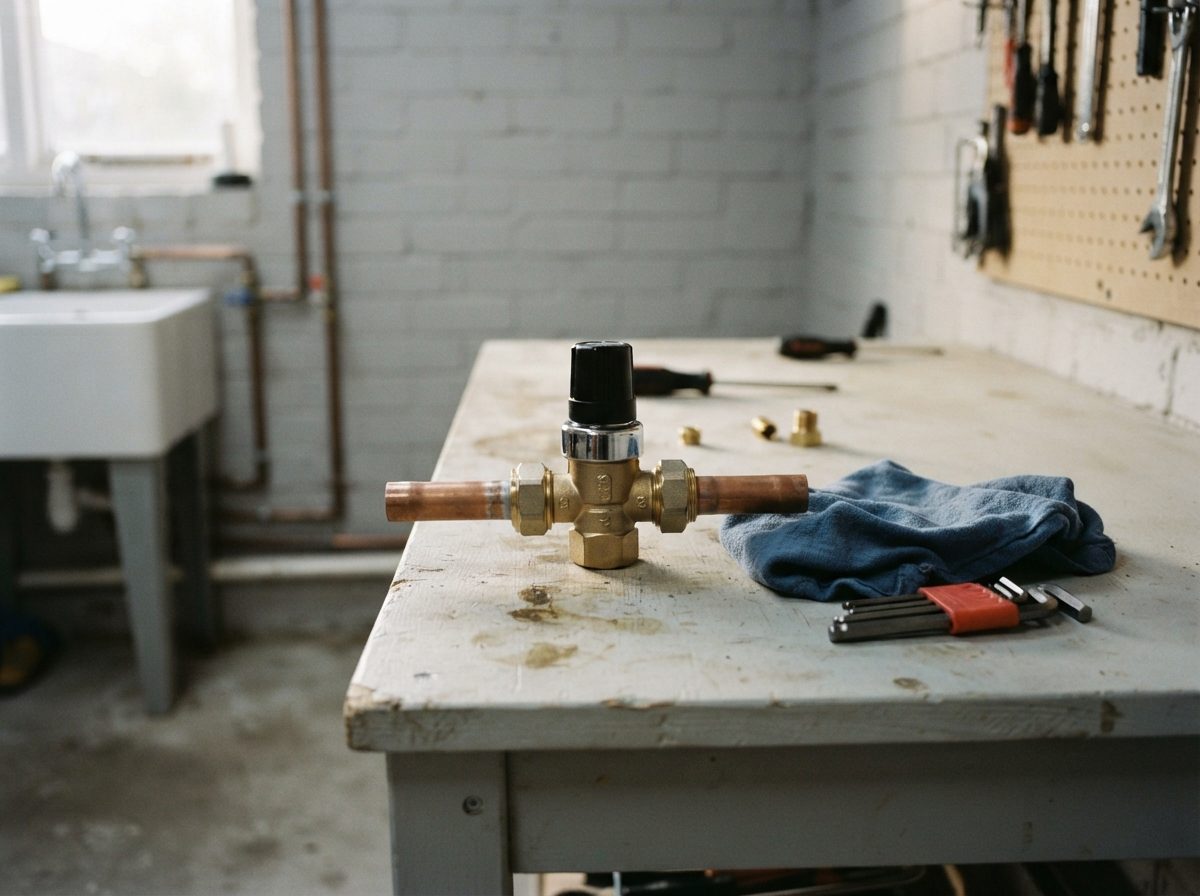
Replace, or keep repairing?
Most valves can be serviced and repaired many times: new cartridges, seals and check valves bring a tired valve back into line. Replacement becomes the sensible choice when that stops being true. The common reasons are a valve that has failed and cannot be rebuilt, a model whose parts are no longer made, a valve that has drifted at test after test despite servicing, and a valve that was never right for where it is, such as a domestic-type valve on an outlet used by care home residents.
Replacement is for building owners, managers and landlords who already have TMVs in place and want them to work reliably. It often follows a service visit or a fault-finding visit where the engineer has found that a repair would cost close to a new valve, or that the same fault will come back. It also follows a survey or register review that has picked out valves with the wrong approval for their setting.
If the valve is basically sound and only needs a clean, new seals or a cartridge, repair is likely to be better value. If there was never a valve on the outlet, that is an installation. And if the problem is that the valve cannot be reached, an access upgrade may be the thing to fix first, with replacement done at the same visit.
What a replacement involves
Taking out the old valve is the simple part. The useful work is choosing what goes back and making sure it is set and recorded properly.
- Confirming the reasonThe engineer checks why the valve is being replaced, with readings where it still works. A valve that runs cold because of a supply problem will not be cured by a new valve.
- Like-for-like or better-suitedWhere the existing valve suited its setting, a direct equivalent keeps pipework changes small. Where it did not, the replacement is chosen for the setting: a TMV3 valve in a care or health setting, a valve rated for the actual supply pressures, or a different body that fits the space.
- Checking the suppliesHot and cold temperatures and the supply arrangement are checked, because a new valve outside its approved conditions will drift just like the old one.
- Adding missing isolators and strainersOlder installations often lack isolating valves or strainers on the inlets. Replacement is the natural moment to add them.
- Removing the old valveThe supplies are isolated, the valve is taken out and the pipework is prepared for the new body, including any changes to connections or position.
- RecommissioningThe new valve is set to the maximum temperature for the outlet, the fail-safe is tested by isolating the cold supply, and the readings become its new baseline.
- Resetting the test cycleA replaced valve starts its test history again, with in-service tests at about 6-8 weeks and 12-15 weeks after commissioning before its longer interval is set.
Things to sort out before booking
-
Note the make and model if you can
A photo of the valve body, any label and the pipework around it helps the engineer judge whether a like-for-like part exists.
-
Gather the test history
Earlier readings show whether the valve has drifted steadily, failed suddenly or never held its setting. That shapes what replaces it.
-
Say who uses the outlet now
Use changes over time. A bathroom that served staff may now serve residents, which can change the approval and temperature the valve needs.
-
Group replacements where possible
If several valves of the same old model are in a building, replacing them in one programme keeps parts, settings and records consistent.
Good to know about replacement
-
Obsolete is common
Valve models are discontinued and spares stop being made. When a cartridge for an older valve can no longer be sourced, replacement is often the only lasting fix.
-
A domestic valve in a care setting is a mismatch
TMV2 valves are approved for domestic-type use. Care and health settings normally call for TMV3 performance, and inspectors and commissioners may ask about it.
-
Chronic drift is a signal
A valve that moves several degrees between tests after every service is telling you something: wrong valve, unsuitable supplies, or wear beyond repair. Shortening test intervals manages the risk but does not solve it.
-
Replacement can shorten dead legs
If the old valve sits a long way from the outlet, a replacement fitted nearer the tap reduces the run of mixed water, which helps Legionella control.
How a replacement is arranged
- 1
Send the details
Use the enquiry form to describe the valve, the outlet, the fault or reason, and any photos or test records you have.
- 2
Matched to an engineer
Alex passes the job to a partner engineer in your area who works on the type of valve and building involved.
- 3
Choice and price agreed
The engineer confirms the replacement valve and any pipework changes. The price is agreed with you before the old valve comes out.
- 4
Swap and recommission
The new valve is fitted, set and fail-safe tested, with the outlet back in use the same visit where the job allows.
- 5
New baseline on record
You should expect the commissioning readings, fail-safe result and first test dates for the new valve, and a note of what was removed.
Questions about thermostatic mixing valve replacement
How do I know a valve needs replacing rather than repairing?
Signs include parts no longer being available, repeated drift after servicing, damage to the valve body, or the wrong approval for the setting. The engineer will say which applies after looking at it.
Can I replace a TMV2 valve with a TMV3 valve?
Usually yes, provided the TMV3 valve is approved for the supply pressures on site and fits the space. In care and health settings that is often the reason for the change.
Will the new valve fit the existing pipework?
A like-for-like model often fits with little change. A different valve may need connections adjusted or the valve moved, which is confirmed before the price is agreed.
Does a replacement valve need commissioning?
Yes. Every new valve should be set, fail-safe tested and recorded, then tested again at about 6-8 weeks and 12-15 weeks.
What does replacement cost?
It depends on the valve chosen, access and any pipework changes. The price is confirmed with you before work starts.
Can several valves be replaced at once?
Yes. Replacing a group of the same old model in one programme is common and keeps settings and records consistent across the building.
Linked services
- TMV repairWhen the valve can be brought back with a cartridge, seals or check valves.
- TMV fault findingFor working out whether the valve or the supplies are behind the problem.
- TMV access upgradesFor valves that are hard to reach, worth sorting at the same visit.
- Care homesHow replacement fits with the expectations placed on care settings.
Have a valve that is past repair?
Send us the valve details and what has gone wrong. Alex will match the replacement to a partner engineer and agree the price before the old valve comes out.
Send an enquiry