
TMV servicing for homeowners
TMV Servicing Specialists arranges TMV servicing for homeowners across the UK. If your bath or shower has a thermostatic mixing valve, a partner engineer can test it, clean it and set it to a safe temperature, so you know it will protect whoever is in the bath. It suits families with small children, people caring for older relatives and anyone whose new-build bath has a valve they have never looked at.
The small valve under your bath
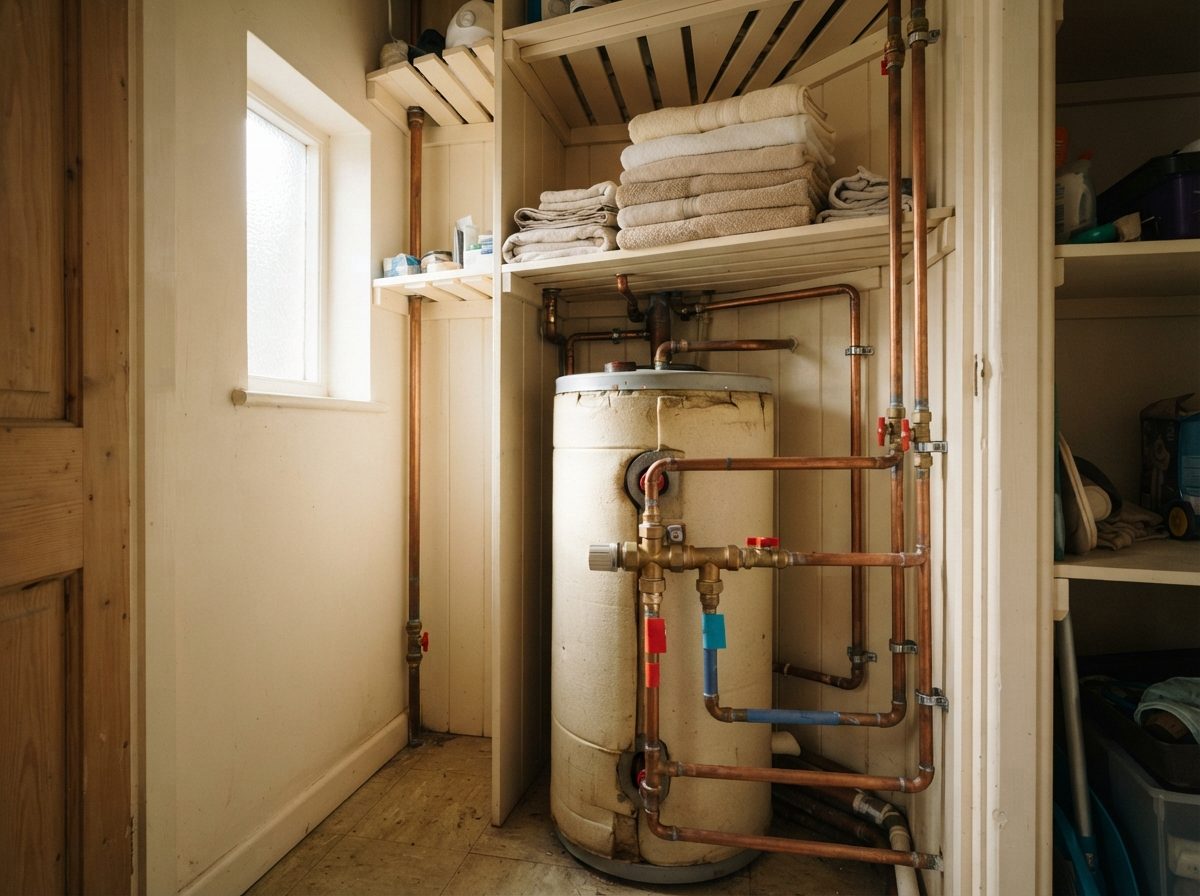
Many homes have a TMV without the owner knowing. Since Building Regulations Part G limited hot water to baths in new homes in England to 48°C, most new-build and converted homes have a valve on the bath supply, often hidden behind the bath panel or in an airing cupboard. Wales has its own Part G with a similar rule, and Scotland's building standards set a comparable limit. Older homes may have one because a previous owner fitted it for a child or an older parent. Built-in thermostatic shower mixers do a similar job at the shower. Like any valve, they collect scale and debris over the years and can drift, stick or stop protecting you if the cold supply fails.
Young children and older adults are the people most at risk of a serious scald, because their skin is thinner and they react more slowly. If you have a toddler in the bath, a parent who has moved in with you, or someone in the family with reduced feeling in their legs, a valve that works matters. In a home there is no written scheme or inspector setting a test interval; manufacturers usually recommend regular servicing, and many people choose to have the valve checked once a year or when they notice a change.
This page is for owner-occupiers. If you rent the home out, the landlords and HMOs page covers your extra duties. If your shower or bath has stopped working properly, TMV fault finding will get to the cause; if the valve is old and seized, TMV replacement may be the better choice. If you are adapting a bathroom for someone with a disability, see TMV access upgrades.
What a home TMV service includes
Most homes have one to three valves, so the visit is usually short. It normally covers:
- Finding the valveThe engineer locates the TMV, whether it is behind the bath panel, under the basin or in the airing cupboard, and checks it can be isolated.
- Temperature check at the tapThe bath or shower is run and the mixed temperature measured with a thermometer, so you know what the valve is actually delivering.
- Fail-safe testThe cold supply is turned off at the valve to check the hot water stops or slows to a trickle, then turned back on to check the temperature recovers.
- Cleaning strainers and cartridgeThe small filters on the inlets and the thermostatic cartridge are cleaned, which often improves flow as well as temperature control.
- Setting the temperatureThe outlet is set to a safe figure, commonly no more than 44°C at a bath for a family home, or lower if you are bathing a baby or someone vulnerable.
- Advice on your systemCombi boilers, unvented cylinders and tank-fed systems run at different pressures; the engineer can tell you if your valve suits the system you have.
- A written recordYou should expect a note of the readings, the fail-safe result and anything that needs attention, which is useful when you come to sell the house.
Before you book
-
Know your hot water system
Tell us whether you have a combi boiler, an unvented cylinder or a tank in the loft. It helps match the right parts and check pressure suitability.
-
Clear access
If the valve is behind a tiled-in bath panel, say so. Some panels are screwed or stuck in place and access may take longer.
-
Who uses the bath
Mention if a baby, young child or older relative is the main user, so the temperature can be set with them in mind.
Good to know as a homeowner
-
Signs a home valve needs a service
Water that is cooler or hotter than it used to be, temperature that wanders while you bathe, a weak flow on one side, or the valve not having been looked at in several years.
-
New homes usually have one
If your home was built or converted in England or Wales since around 2010, there is very likely a valve limiting the bath to 48°C.
-
Combi boilers and pressure
A combi boiler and mains cold supply usually give balanced, high pressure. A low-pressure gravity system needs a valve designed for it, or the valve may not control well.
-
Do not just turn the boiler down
Lowering the stored hot water temperature to avoid scalds can encourage bacterial growth in cylinders. A TMV lets the store stay hot while the bath stays safe.
How booking a home TMV service works
- 1
Send us the details
Use the enquiry form to give your postcode, the type of hot water system and where the valve is, if you know.
- 2
Alex matches a local engineer
Alex passes the job to a partner engineer who covers your area.
- 3
You agree the price first
The price depends on how many valves there are and whether parts are needed. We confirm it with you before work starts.
- 4
The engineer visits
The valve is tested, cleaned, set and tested again, with you shown the reading at the tap.
- 5
You keep the record
A visit usually leaves you with the readings and a note of anything that needs doing next.
Homeowner TMV questions
How do I know if I have a TMV?
Look behind the bath panel, under the basin or in the airing cupboard for a small brass or chrome valve with hot, cold and mixed connections. Homes built in England or Wales in recent years usually have one on the bath.
How often should a home TMV be serviced?
There is no legal interval for a private home. Manufacturers usually recommend regular servicing, and many homeowners have it checked once a year.
What temperature is safe for a child's bath?
Many people aim for around 37-38°C at the time of bathing, and a TMV set to no more than 44°C at the bath tap stops it starting much hotter.
Does a combi boiler need a TMV?
A combi does not stop the bath running hot. Whether you need a TMV depends on who uses the bath, but new homes with combis still have to meet the Part G limit.
My shower has a thermostatic mixer. Is that a TMV?
It does a similar job built into the shower. It can be serviced in the same way, and it gets clogged with scale in hard water areas.
Can I service the valve myself?
Some manufacturers publish cleaning steps, but testing the fail-safe properly needs the right thermometer and isolation. If in doubt, have it checked.
Related services and sectors
Have your bath valve checked
Send an enquiry with your postcode and hot water system, and Alex will match you to a partner engineer nearby and confirm the price before work starts.
Send an enquiry