
TMV asset registers
TMV Servicing Specialists builds and updates TMV asset registers for buildings across the UK. A partner engineer walks the site room by room, finds each thermostatic mixing valve, labels it and records what it is, what it serves and when it is next due. You keep the register as a spreadsheet and can load it into whatever system you already use.
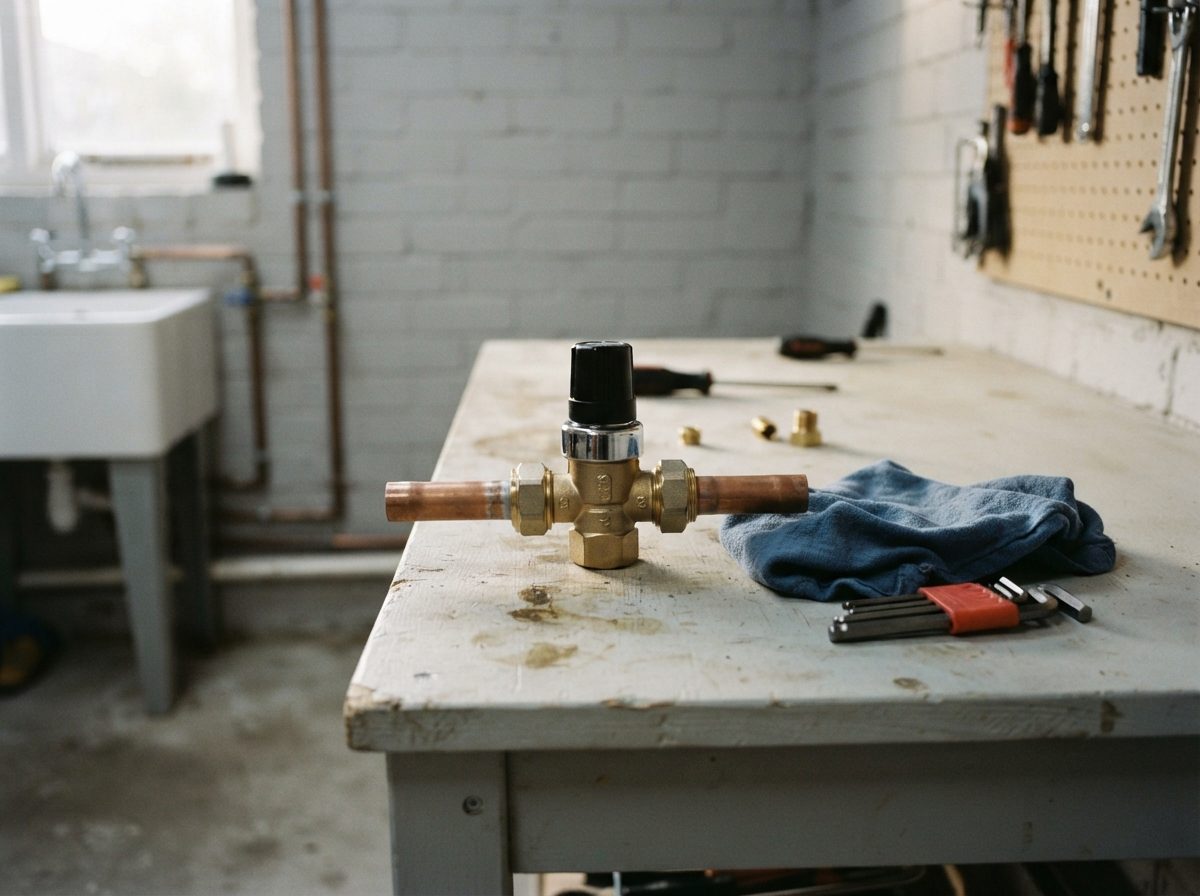
What a TMV asset register is, and who needs one
A TMV asset register is the list that turns a building full of hidden valves into something you can manage. Each row is one thermostatic mixing valve: where it is, which basin, bath or shower it feeds, what make and model it is, whether it carries TMV2 or TMV3 approval, the temperature it is set to and when it was last tested. Without that list, servicing depends on someone remembering which cupboard or ceiling void hides which valve, and valves that nobody can find tend to go years without attention.
Registers matter most where there are many valves and several people responsible for them: care homes, hospitals and clinics, schools, social housing portfolios, student blocks and hotels. Duty holders under the Health and Safety at Work etc. Act 1974 need to show they control scald and Legionella risk, and inspectors and auditors commonly ask to see how each outlet is controlled. A register that matches the building is the simplest way to answer that question with evidence rather than reassurance.
This service is right when you do not know how many TMVs you have, when an old register no longer matches the building after refurbishment, or when you are moving to a planned maintenance contract and need an accurate starting list. If you already have a reliable register and only need the valves looked at, routine TMV servicing or a testing visit is the better fit. If you also want advice on whether each outlet should have a valve at all, a TMV survey covers the risk side as well as the inventory.
What goes into the register
Each valve gets one row. The columns below are a typical starting set; extra fields can be added to suit your own systems.
- Unique valve IDA short reference such as a block, floor and number code, chosen to sort sensibly and to match the label fixed at the valve.
- Location and access notesBuilding, floor, room name or number, and exactly where the valve sits: behind a bath panel, in a duct, above a ceiling tile, under a basin. Notes cover keys, screws, tiled panels or occupied rooms.
- Outlets servedWhich basin, bath, shower or sink the valve feeds, and whether one valve feeds more than one outlet, which matters for testing and for Legionella flushing.
- Make, model and approvalManufacturer and model where they can be read, valve size, and whether it is marked TMV2, TMV3 or both, so spares and the right test method can be chosen.
- Set temperature and readingsThe target mixed temperature for that outlet and the temperature measured on the day, alongside the hot and cold supply temperatures where they can be taken.
- Condition and observationsVisible scale, leaks, missing isolation valves or strainers, seized isolators, damaged pipework or a valve fitted too far from its outlet.
- History and datesInstall date if known, last service or test, last fail-safe result, and the next due date calculated from the interval your risk assessment sets.
- Labels at the valveA durable label at each valve, and where the valve is hidden, a second label at the access panel or outlet, so the next engineer finds the right one.
Before a register visit
-
Floor plans and room schedules
Any plans with room numbers help match the register to names staff already use. If none exist, the register can follow the numbering on doors.
-
Existing records
Old registers, service sheets and logbooks give a starting point and history worth carrying across, even when they are incomplete.
-
Access to every room
Bedrooms, plant rooms, roof spaces, locked stores and ducts all need to be open on the day, with someone who holds the keys.
-
The format you need
Say which columns your CAFM, compliance or Legionella software expects so the spreadsheet can be laid out to import cleanly.
Worth knowing about TMV registers
-
Valves hide in odd places
Concealed valves behind tiled panels or above ceilings are the ones most often missed. Where access needs a panel removed, the register records that, so later visits allow for it.
-
A register links to the written scheme
Under HSE ACOP L8 and HSG274 Part 2, the Legionella written scheme should describe the hot and cold water system and its controls. Listing each TMV, its location and its outlets is part of that picture, and little-used outlets flagged on the register feed the flushing list.
-
Intervals belong to the valve
Healthcare guidance in D 08 sets testing intervals by how much each valve drifts. A register with per-valve dates handles that better than one date for the whole building.
-
Registers go stale
Refurbishments, replaced valves and changed room uses all need updating. Keeping the register current at each service visit is far easier than repeating a full survey.
From enquiry to finished register
- 1
Tell us about the building
Use the enquiry form to describe the site, roughly how many rooms have hot water outlets and what records you have.
- 2
Alex arranges an engineer
Alex looks at the size and type of building and matches the job to a partner engineer who can cover your area.
- 3
Price confirmed first
The price depends on the number of rooms, how hidden the valves are and whether testing is included; it is agreed with you before any work starts.
- 4
Site walk and labelling
The engineer goes room by room, finds, identifies and labels each valve and records readings and condition.
- 5
Register handed over
You receive the completed spreadsheet, with a list of any valves that need repair, replacement or further investigation.
TMV asset register questions
Is a TMV register a legal requirement?
No law names a TMV register as such. Duty holders must control scald and Legionella risk and show how they do it, and a per-valve register is the usual way to evidence that.
Can the valves be tested during the same visit?
Yes, many sites combine the register walk with temperature checks and fail-safe tests, which gives each new row a baseline reading straight away.
What format is the register in?
A spreadsheet that you own outright. It can be laid out to suit import into CAFM, compliance or Legionella management software.
What if a valve cannot be identified?
The register records it as unidentified with a description and photos where possible, and flags it for checking when the valve is next opened up.
Do you label every valve?
Each valve found gets a label, with a matching reference at the access panel where the valve itself is hidden.
How often should the register be updated?
Every time a valve is serviced, tested, replaced or removed, so the next due date and history stay accurate.
Can you update a register someone else made?
Yes. An existing register can be checked against the building, corrected and extended rather than started again.
Related services
- TMV surveysA wider look at whether each outlet needs a valve, which approval fits and where the risk lies.
- TMV maintenance contractsPlanned visits driven by the dates held on your register.
- TMV testingTemperature and fail-safe tests that keep each row of the register current.
- TMVs and LegionellaHow mixing valves fit into a Legionella written scheme.
Need a TMV asset register for your building?
Tell us about the site, how many rooms have hot water outlets and what records you already hold. Alex will match the job to a partner engineer and confirm the price before the register visit is booked.
Send an enquiry