
TMV repair
TMV Servicing Specialists arranges TMV repair across the UK, fitting new parts to thermostatic mixing valves that are worth keeping. A partner engineer replaces the worn cartridge, seals, check valves or strainers, resets the outlet temperature and proves the fail-safe. When a repair would not last, you are told so and replacement is discussed instead.
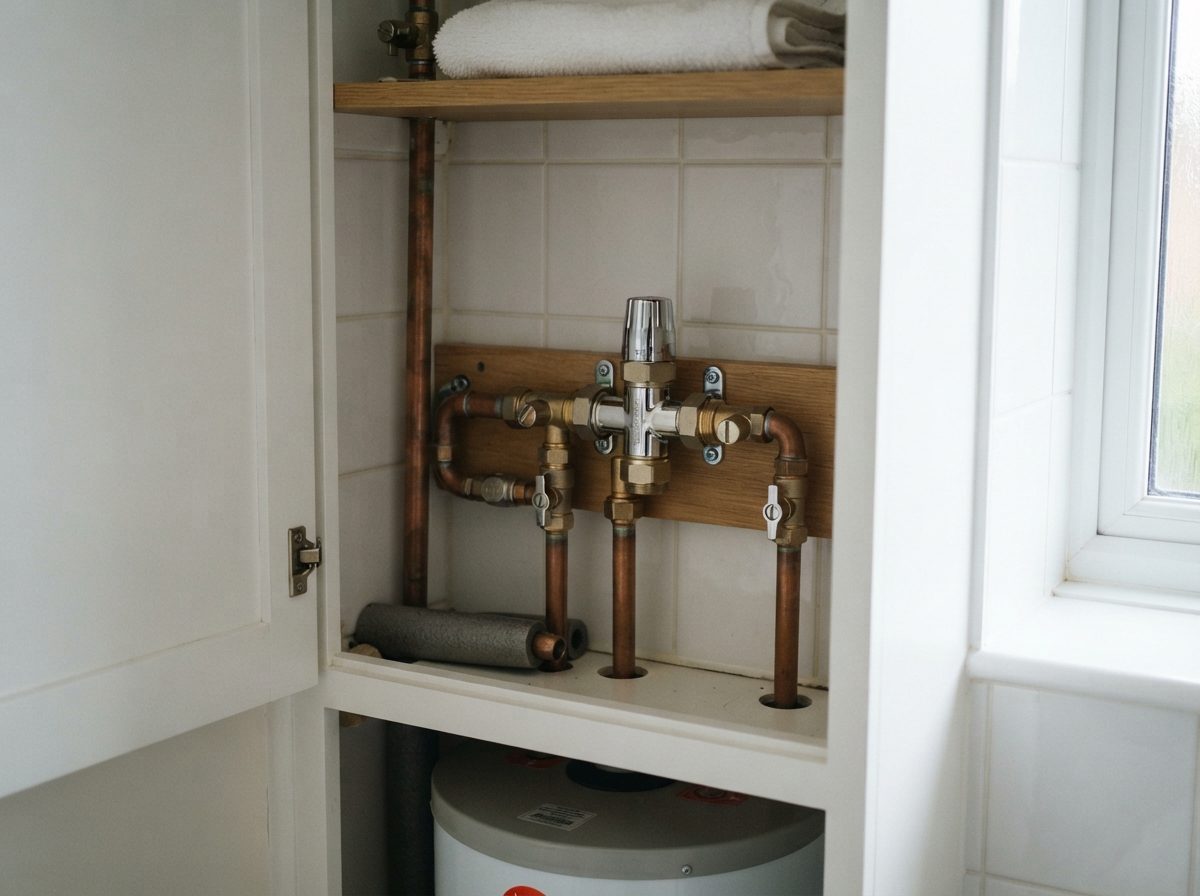
Repairing a mixing valve with new parts
Most thermostatic mixing valves are built so that the parts that wear can be replaced without changing the whole valve. The thermostatic cartridge is the heart of it: a sensing element and a moving shuttle that balances hot and cold. Around it are O-rings and seals, inlet check valves that stop cross-flow and strainers that protect the cartridge. TMV repair means taking out the part that has failed and fitting a new one that matches the valve's make and model.
Repair makes sense when the valve body is sound, the model is still supported with parts, and the fault has been traced to something specific: a cartridge that no longer holds its setting or fails its fail-safe, a weeping seal, a check valve that lets hot water into the cold pipe, or a damaged strainer. It suits valves in all sorts of settings, from a combination unit beside a boiler in a flat to banks of valves in a plant room serving a care home.
Repair is not always the sensible choice. If the valve is old, out of production, corroded or approved for the wrong supply pressures, putting new parts into it can cost almost as much as a new valve and still leave you with a poor fit for the site. If the cause of the problem has not been found yet, fault finding should come first. And if the valve simply needs descaling and new seals, a full strip-down service may be enough.
Repairs typically carried out
What is fitted depends on the fault and what the manufacturer supplies for that valve. Common repairs include these.
- Cartridge replacementA new thermostatic cartridge where the old one is worn, cracked or too scaled to respond. This is the usual cure for a valve that fails its fail-safe.
- O-ring and seal kitsReplacement seals for the cartridge, body and caps, fitted where seals are leaking, perished or were disturbed during dismantling.
- Check valvesNew non-return valves on the inlets where the old ones stick open and allow cross-flow between hot and cold supplies.
- StrainersNew inlet strainers where the mesh is torn or collapsed and no longer protects the cartridge.
- Isolation valvesSeized or leaking isolators near the valve can be renewed, so the valve can be serviced and tested properly in future.
- Temperature resetAfter any repair, the mixed temperature is set at the outlet to the agreed figure and checked once settled.
- Fail-safe proofThe cold supply is isolated to confirm the repaired valve shuts down, and the result is recorded with the parts fitted.
Planning a repair
-
Identify the valve
A photo of the valve and any markings on it, or an old service record, helps the right parts to be sourced. Some parts are specific to a single model.
-
Know what was found before
If a previous test or fault-finding visit recorded the cause, share it. It saves repeating diagnosis.
-
Allow for parts lead times
Common parts may be easy to get; others have to be ordered. A repair may need a return visit once parts arrive.
-
Keep the outlet safe meanwhile
A valve awaiting a repair for an over-temperature or fail-safe fault should stay out of use until the work is done.
Repair or replace?
-
When repair is usually right
The body is sound, parts are available, the valve suits the supply pressures and the setting it serves, and it has not needed repeated repairs.
-
When replacement is usually right
Parts are discontinued, the body is corroded, the valve is approved for the wrong pressure or setting, or repairs keep recurring.
-
Approval matters for the setting
A valve for healthcare should hold a TMV3 approval for its use; domestic-type settings commonly use TMV2. A repair does not change the approval a valve holds.
-
Use matching parts
Mixing non-matching parts into a thermostatic valve can affect how it performs. Parts are matched to the make and model.
How a TMV repair is arranged
- 1
Send details of the fault
Use the enquiry form to describe the valve, its location and the fault, and include any earlier findings or photos.
- 2
Alex matches the repair
Alex passes the job to a partner engineer covering your area and shares what is known about the valve.
- 3
Price agreed before work
The price depends on the parts and labour needed. We confirm it before work starts, and if the engineer finds more on site, that is agreed with you first.
- 4
Parts fitted
The engineer fits the parts, resets the temperature and proves the fail-safe.
- 5
Paperwork
A repair visit usually leaves you with the parts fitted, readings before and after and the fail-safe result for the valve.
TMV repair questions
Can any TMV be repaired?
Many can, provided parts are still made for the model and the body is in good condition. Older or obscure valves sometimes have no parts available.
How do I know if the cartridge needs replacing?
Signs include failing the fail-safe test, drifting even after cleaning, or a slow and unsteady response. Testing confirms it.
Will a new cartridge fix water that is too hot?
If the cartridge is the cause, yes. A blocked strainer or supply problem can produce the same symptom, which is why the cause should be found first.
Can a repair be done in one visit?
If the parts are to hand. Where they need ordering, the outlet is made safe and the repair finished on a return visit.
Is it worth repairing an old valve?
It can be, if parts are available and the valve suits the site. If it has had repeated repairs or parts are scarce, replacement is often the better use of money.
Do I need the valve retested after a repair?
The temperature is reset and the fail-safe proved as part of the repair. A follow-up check a few weeks later is good practice after a cartridge change.
Can you repair thermostatic showers too?
Many thermostatic shower valves use replaceable cartridges and seals in the same way. Parts availability depends on the model.
Related services
- TMV fault findingTracing the cause of a problem before any parts are bought.
- TMV replacementChanging a valve that is beyond economic repair for one that suits the site.
- Thermostatic shower valvesServicing and repair of thermostatic valves built into showers.
- TMV2 vs TMV3How the two approval schemes differ and which one a setting needs.
Arrange a TMV repair
Send an enquiry describing the valve and the fault. Alex will match it to a partner engineer and the price is confirmed before work starts.
Send an enquiry