
TMV strainer cleaning and check valves
TMV Servicing Specialists arranges TMV strainer cleaning and check valve inspection across the UK. Each valve's inlet strainers are removed, cleared of grit and scale and refitted, and the check valves behind them are looked at for signs that hot and cold water are crossing over. Small parts, but they decide how well the valve works.
Why strainers and check valves matter
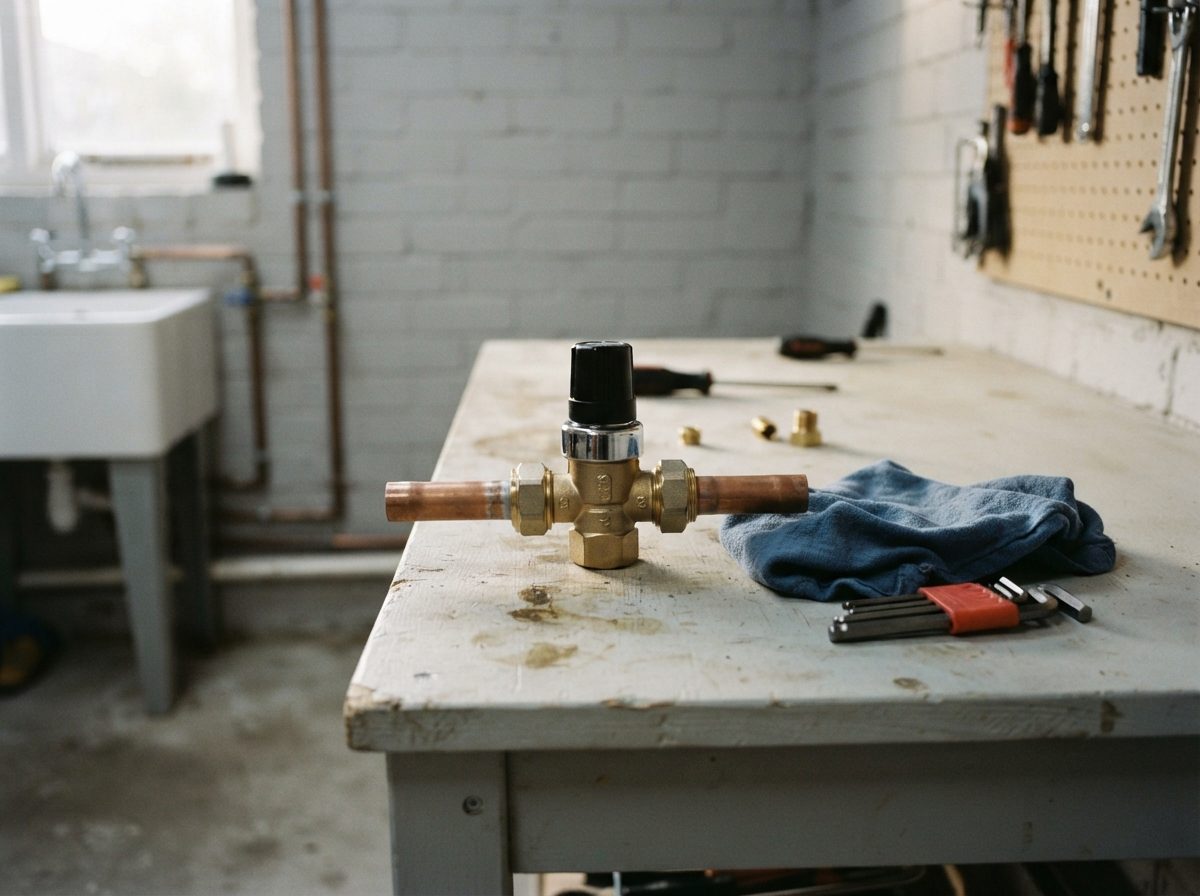
Most thermostatic mixing valves have a fine mesh strainer on the hot and cold inlets. Their job is to stop grit, flux, swarf and flakes of scale reaching the thermostatic cartridge, which has close-fitting moving parts. The strainers do that job well, but they fill up. As the mesh blocks, flow through that inlet falls, the balance between hot and cold shifts and the mixed temperature moves. A strainer half blocked on the cold side can push the outlet temperature up; one blocked on the hot side leaves users with lukewarm water and a weak flow.
Behind or alongside the strainers sit check valves, small non-return valves that stop hot water pushing back into the cold pipe, or the other way round. When a check valve sticks open, perhaps held by a speck of debris or a perished seal, water can cross between supplies whenever pressures are unequal. The signs are warm water from cold taps, a cold supply that runs hot for a while, or temperatures at other outlets that do not make sense.
HTM 04-01 Part B and its D 08 supplement expect strainers to be cleaned and checked annually in healthcare, and other sites usually take a similar interval from their risk assessment. In hard water areas, or on systems with older pipework that sheds debris, strainers may need attention more often. If a strainer is clean but the valve still misbehaves, the problem lies deeper and a full service or fault finding is the next step.
What strainer cleaning covers
Cleaning and inspection usually runs through these steps on each valve.
- Readings firstThe outlet temperature and flow are noted before the strainers are disturbed, so any improvement afterwards is clear.
- Isolation of both suppliesHot and cold isolators to the valve are closed so the strainer housings can be opened without flooding.
- Strainer removal and cleaningEach strainer is taken out, debris and scale are cleared from the mesh, and the strainer is checked for splits or collapse.
- Damaged strainers renewedA strainer with torn or distorted mesh lets debris through to the cartridge. Where a replacement is available for the model, it can be fitted.
- Check valve inspectionCheck valves are examined and, where possible, tested for sealing. Debris is cleared from them and any that do not close cleanly are noted.
- Housing sealsO-rings on strainer caps and housings are checked, as an old seal disturbed during cleaning can start to weep.
- Readings afterSupplies are restored, the valve is allowed to settle and the outlet temperature is taken again, along with a fail-safe check.
Plan ahead for strainer cleaning
-
Your water hardness
Knowing whether the site is in a hard or soft water area helps set expectations. Hard water leaves scale; soft water areas still bring sediment and pipe debris.
-
Any recent plumbing work
Work on the pipework upstream often sends a burst of debris to the valves. Cleaning soon after such work is sensible.
-
Reports of warm cold taps
Tell us if anyone has noticed hot water in cold pipes. It points to a check valve and helps the engineer plan where to look.
-
Isolators at each valve
Strainers cannot be removed without isolating the valve's supplies. Seized or missing isolators may mean extra work.
Good to know about strainers
-
Not every valve has removable strainers
Some valves have strainers built into the inlet fittings or cartridge. Where a strainer cannot be reached separately, it is cleaned as part of a fuller service.
-
Cross-flow can affect the whole building
A failed check valve at one TMV can let hot water into the cold system, warming water at other outlets and working against Legionella control.
-
Blocked strainers mimic other faults
Low flow, a temperature that drifts or a valve that seems to fail its fail-safe can all come down to blocked strainers. They are a sensible first check.
-
Do not remove strainers to improve flow
Taking strainers out to cure a low flow lets debris straight into the cartridge. It swaps one problem for a worse one.
Booking strainer cleaning
- 1
Tell us about the valves
Use the enquiry form to say how many valves there are, where they are and whether anyone has noticed low flow or warm cold taps.
- 2
Alex arranges cover
Alex finds a partner engineer covering your area and passes on the details.
- 3
Price before work
The price reflects the number of valves and access to their isolators and strainers. We confirm it before work starts.
- 4
Cleaning visit
The engineer isolates each valve, cleans the strainers, inspects the check valves and takes readings before and after.
- 5
What you are left with
You should expect a note for each valve of strainer condition, check valve findings, readings and any parts needed.
TMV strainer cleaning questions
How often should TMV strainers be cleaned?
HTM 04-01 sets annual cleaning and checking in healthcare. Elsewhere your risk assessment sets it, and hard water or dirty pipework can justify a shorter interval.
Why is there hot water coming out of my cold tap?
A common cause is a check valve on a mixing valve that has stuck open and is letting hot water cross into the cold supply. It needs inspecting.
Can a blocked strainer make the water too hot?
Yes. If the cold strainer blocks more than the hot, less cold water reaches the cartridge and the mixed temperature rises.
Is strainer cleaning part of a routine service?
A light clean is part of a routine service. This dedicated visit gives the strainers and check valves a closer look, especially where problems have been reported.
What happens if a check valve has failed?
It is noted and, where parts exist for the valve, replaced as a repair. Until then, cross-flow may continue whenever supply pressures differ.
Does soft water mean strainers do not need cleaning?
No. Scale builds more slowly in soft water areas, but strainers still catch sediment and debris from mains and pipework.
Will the water be off while strainers are cleaned?
The valve being worked on is isolated for the duration. Other outlets usually stay in use unless wider isolation is needed.
Related work on valve inlets
- TMV repairReplacement check valves, strainers and seal kits where cleaning finds worn parts.
- TMV full serviceA strip-down and descale when the cartridge itself is scaled, not just the strainers.
- TMVs and LegionellaHow mixed water, cross-flow and dead legs affect Legionella control.
- TMV servicingRoutine visits that include a light strainer clean alongside readings and a fail-safe test.
Book TMV strainer cleaning
Send an enquiry with your valve count and any symptoms you have seen. Alex will pass it to a partner engineer and confirm the price before work starts.
Send an enquiry