
TMV servicing for hotels
TMV Servicing Specialists arranges TMV servicing for hotels across the UK. A partner engineer tests, cleans and records the thermostatic valves in guest bathrooms, spa areas and staff washrooms, working room by room in the gap between one guest leaving and the next arriving. Bedrooms stay sellable, and you end up with a record you can hand to an auditor or insurer.
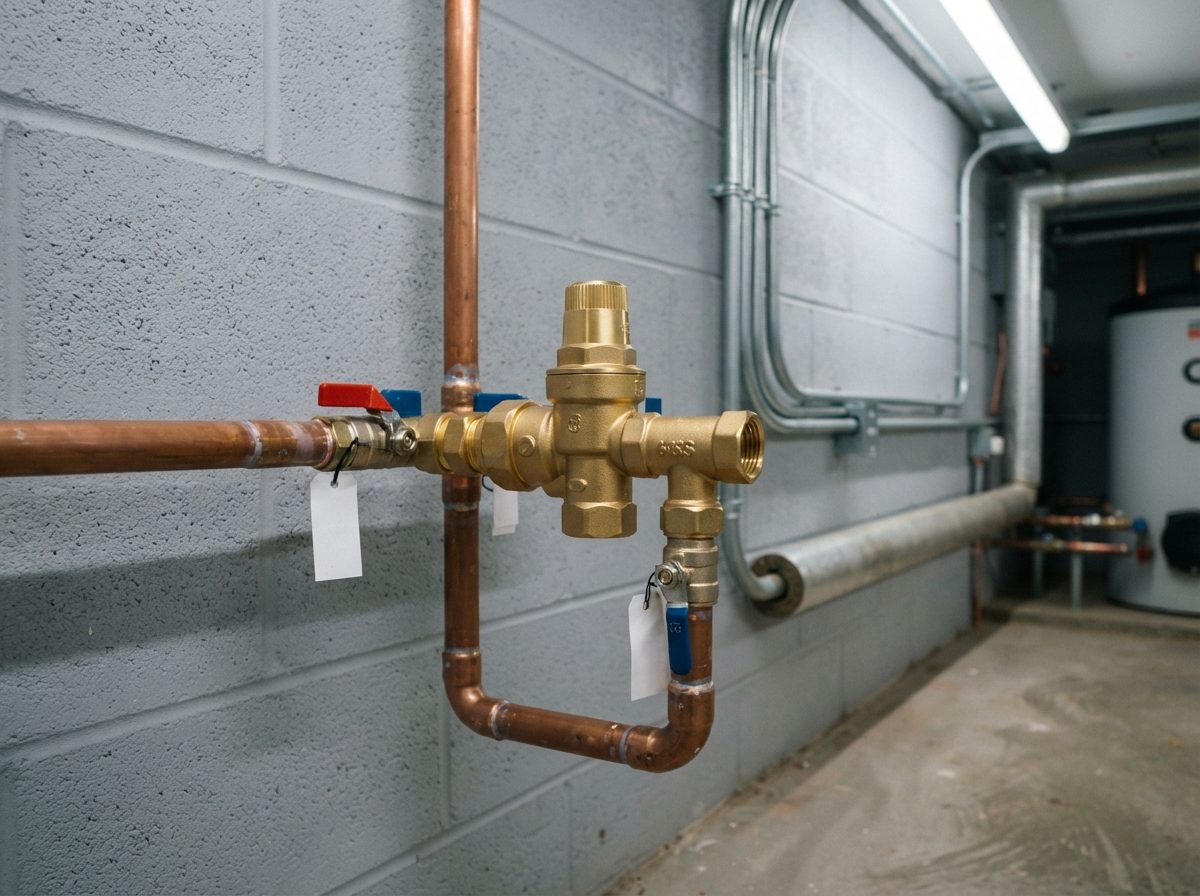
Hot water safety in a hotel, room by room
A hotel guest steps into an unfamiliar shower, often tired, sometimes after a drink, and turns a control they have never used before. Children share baths with parents, older guests stand under showers with poor grip, and nobody reads the label on the mixer. A thermostatic mixing valve that holds the outlet at a safe temperature, and shuts down if the cold supply drops, is what stands between that guest and a scald. This page is for hotel general managers, maintenance managers, group property teams and owners of guest houses and serviced apartments who need those valves kept working without taking rooms off sale.
Hotels sit in an awkward spot for water safety. Some bedrooms are booked every night while others sit empty midweek, out of season or during refurbishment, and those quiet rooms are where water stagnates. Spa pools, treatment rooms, gym showers and kitchen hand-wash basins all add outlets with their own patterns of use. A sensible TMV programme for a hotel follows the Legionella risk assessment and the written scheme, which under the Health and Safety at Work etc. Act 1974 and HSE's ACOP L8 sit with whoever controls the premises. No regulation gives a fixed number of services a year; the risk assessment sets it.
Choose this page if you run any kind of hotel, inn, aparthotel or guest house and want the valves in guest bathrooms looked after as a planned job. If one shower has suddenly gone cold or scalding, start with TMV fault finding instead. If you are fitting out a new wing or refurbishing bathrooms, look at TMV installation and commissioning, and if you have never listed what valves you have, a TMV survey and asset register is usually the first step.
What a hotel TMV visit covers
Every visit is shaped by the number of rooms, which ones are free on the day and what the written scheme asks for. A typical hotel visit includes:
- Room-by-room temperature readingsThe engineer runs each guest bath, shower and basin, records the mixed temperature with a calibrated thermometer, and notes it against the room number rather than a vague location.
- Fail-safe check on every valveThe cold supply to the valve is isolated to confirm the flow stops or drops to a trickle, then restored to check the temperature settles back close to the earlier reading.
- Strainer and filter cleaningInlet strainers are opened, cleared of scale and debris and refitted, which matters most in the many hotels sitting in hard water areas such as London and the South East.
- Cartridge and seal inspectionThermostatic cartridges and check valves are looked at for wear or scale, and anything that will not hold temperature is noted for repair or replacement.
- Resetting where drift has crept inValves that have drifted from their set point are adjusted back to the setting your risk assessment calls for, for example 41°C at a shower or up to 44°C at a bath.
- Flushing of quiet roomsRooms that have been unoccupied can be flushed as part of the visit, with the date and duration noted so it can go into your water hygiene log.
- Spa, gym and back-of-house outletsShowers in spa changing areas, treatment room basins and staff washrooms can be added, since they are often missed when attention goes to bedrooms.
- Records you can fileYou should expect before and after readings per valve, fail-safe results, a record for each valve and a list of rooms needing further work.
Things to sort out before booking hotel TMV work
-
Room availability
Decide whether the engineer works through rooms as they are vacated after check-out, or whether housekeeping blocks a run of rooms for a few hours. Either works; mixing the two on the day causes delays.
-
Access and keys
Arrange a master key card or a member of staff to escort the engineer, and agree how do-not-disturb signs and late check-outs will be handled.
-
Where the valves are
Some hotels have valves behind bath panels, others in ceiling voids or service risers. Any plans, previous records or a list of room types helps the price and the time on site.
-
Your written scheme
Have the Legionella risk assessment and written scheme to hand so the service interval, temperatures and flushing routine match what your responsible person has set.
Good to know for hotel operators
-
Empty rooms are a Legionella risk
HSG274 Part 2 advises flushing little-used outlets, commonly weekly, and recording it. Rooms closed for a season or refurbishment need flushing before guests return, and TMVs on those outlets should be checked at the same time.
-
Mixed water should not sit in long pipes
Valves fitted well away from the outlet leave a run of warm water that suits bacterial growth. If a survey finds long dead legs, moving valves closer to the outlet is worth planning into refurbishments.
-
TMV2 or TMV3
Most guest bathrooms use TMV2 valves suited to domestic-type use. Where a hotel has accessible rooms used by guests with care needs, or supply pressures outside a valve's range, a different valve approval may be more suitable.
-
Insurers and auditors ask for records
After a scald claim the first question is usually when the valve was last tested. Readings filed by room number answer that quickly.
How hotel TMV servicing is arranged
- 1
Send an enquiry
Use the enquiry form to tell us the hotel's location, the number of rooms and other outlets, and how room availability works on site.
- 2
Alex matches the job
Alex reads the details and matches the hotel to a partner engineer who can work to your check-out and check-in times.
- 3
Price agreed before work
The price depends on room count, access and how much cleaning or repair turns up. We confirm it with you before any work starts.
- 4
The visit
The engineer works through rooms as agreed with your front desk and housekeeping team, leaving each bathroom tidy and ready for the next guest.
- 5
Records for your files
A visit usually leaves you with per-room readings, fail-safe results and a list of valves that need repair or replacement.
Hotel TMV questions
Do guest rooms have to be taken off sale for the work?
Usually not. Most valves can be tested and serviced in the window between check-out and check-in, as long as the room is free when the engineer reaches it.
How often should hotel TMVs be serviced?
Your Legionella risk assessment and written scheme set the interval. Many sites follow HTM 04-01 style testing as a benchmark, moving to longer intervals for valves that hold their temperature well and shorter ones where they drift.
What temperature should a hotel shower be set to?
41°C is the figure commonly used for showers and basins, with baths up to 44°C. Your risk assessment can choose a lower setting, for example in family rooms.
We have rooms closed over winter. What should happen before reopening?
The outlets should be flushed and the TMVs checked for temperature and fail-safe before guests use them, and both should be recorded.
Can the spa and pool showers be included?
Yes. Spa, gym and pool-side showers can go on the same visit, and they often scale faster because they are used heavily.
What if a valve fails its test?
It is recorded and noted for repair or replacement, and you can decide whether to take that room's shower out of use until it is fixed.
Do you cover hotels outside London?
Yes. We arrange work across England, Scotland, Wales and Northern Ireland through our partner engineers.
Related services and sectors
- TMV fault findingWhen a single guest shower runs too hot, too cold or fluctuates and needs diagnosing quickly.
- Thermostatic shower valvesServicing the built-in thermostatic mixers most hotel showers use.
- TMV maintenance contractsA planned schedule across every guest room, so no floor is missed.
- Leisure centres and gymsShower blocks and changing rooms, similar to a hotel spa but busier.
Plan your hotel's next TMV visit
Send an enquiry with your room count and the times rooms are usually free, and Alex will match the job to a partner engineer and confirm a price before anything is booked.
Send an enquiry