
TMV servicing for care homes
TMV Servicing Specialists arranges TMV servicing for care homes across the UK, from residential homes to nursing homes with assisted bathrooms. Every outlet a resident can reach is checked against its set temperature, and each valve gets a written record your manager can show an inspector.
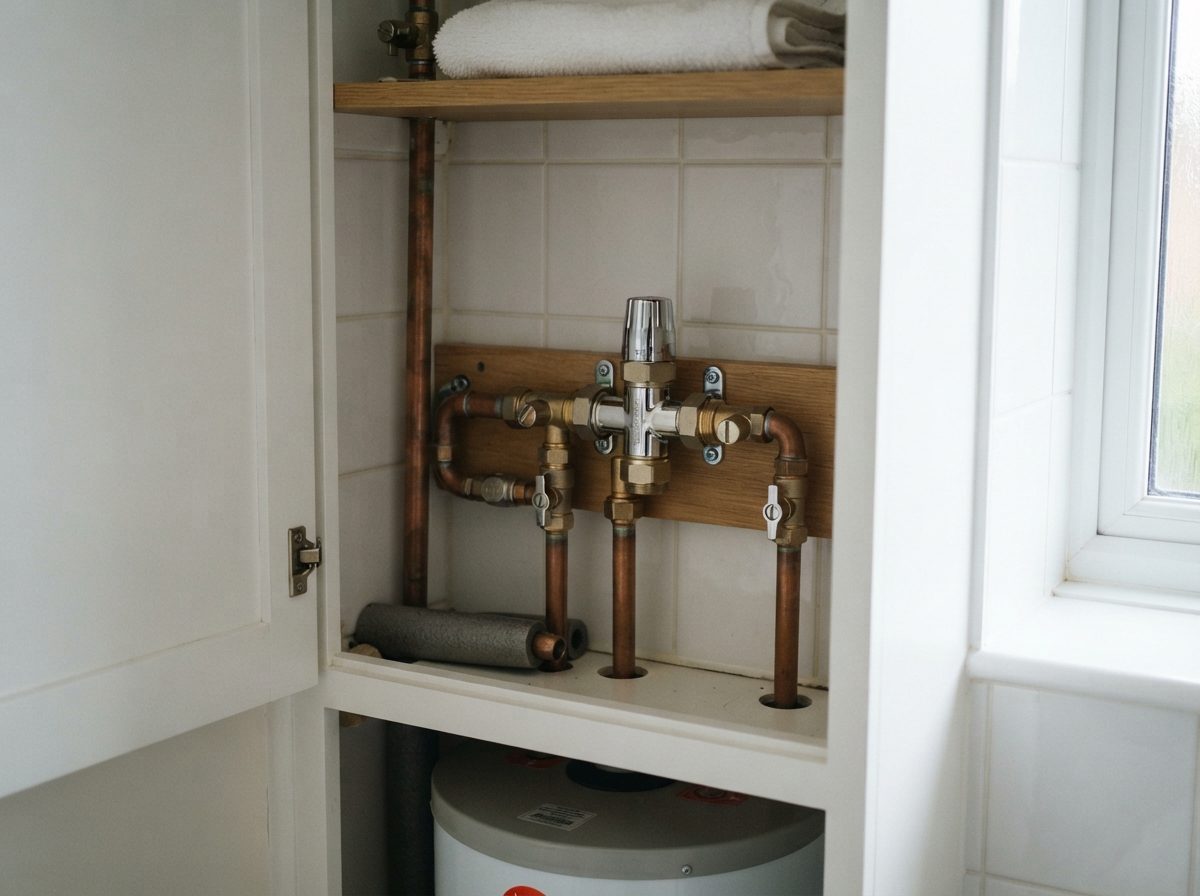
Hot water safety where residents are most at risk
People living in care homes are among the most likely to be badly scalded by hot water. Many have reduced feeling in their skin, limited mobility, dementia or a condition that slows their reaction to heat, and a bath that is a few degrees too hot can cause serious burns before anyone notices. Thermostatic mixing valves on baths, showers and basins are the main engineering control against that risk, and they only keep working if someone tests and maintains them.
This page is for registered managers, owners, maintenance staff and estates teams of residential homes, nursing homes, specialist dementia units and small group homes. It covers the routine cycle of in-service checks on the valves serving bedrooms, en-suites, communal bathrooms and assisted baths, along with the cleaning, adjustment and records that go with it.
If a valve keeps drifting, will not hold temperature or fails its fail-safe test, the job becomes fault finding or repair rather than a routine visit. If you are refurbishing bathrooms or adding en-suites, look at installation and commissioning instead. For a home that does not know how many valves it has or where they are, a survey and asset register usually comes first.
What a care home TMV visit covers
Each valve is treated as its own piece of safety equipment, with readings and findings recorded against its location.
- Outlet temperature readingsThe mixed temperature is measured at each bath, shower and basin with a calibrated thermometer, and compared with the setting chosen in your risk assessment.
- Fail-safe testThe cold supply to the valve is isolated to confirm the flow stops or drops to a trickle, then restored to check the temperature settles back close to its earlier reading.
- Assisted bath outletsBath fills on assisted and hoist baths are checked against the higher fill temperature some homes use where a carer is always present, usually no more than 46°C.
- Strainers and check valvesStrainers are removed and cleaned, and the check valves that stop hot and cold crossing over are inspected, as the service interval or risk assessment directs.
- Adjustment where neededA valve that has drifted is reset to its target temperature, and the before and after figures are both written down.
- Hot and cold supply checksSupply temperatures to the valve are noted, because a weak cold feed or low stored hot water temperature can make a sound valve behave badly.
- A list of further workAnything that needs a part, a replacement valve or a second visit is listed by room so you can plan and approve it.
Before you book
-
Know your outlet count
A rough count of baths, showers and basins with valves, by floor or wing, lets the visit be sized and priced properly.
-
Agree access to occupied rooms
Most outlets are in residents' bedrooms and en-suites. Decide who will accompany the engineer and how residents and families will be told.
-
Pick quieter times of day
Mornings are often busy with personal care. Many homes prefer the engineer to work through bathrooms mid-morning to mid-afternoon.
-
Have your risk assessment to hand
Your water risk assessment should set the target temperature for each outlet type, which is what valves will be checked against.
Good to know for care providers
-
TMV3 is the usual expectation
Care settings commonly use valves approved under the TMV3 scheme, which is based on the NHS D 08 performance specification. Domestic-type TMV2 valves may not be suitable for these outlets.
-
Inspectors look for evidence
The CQC in England, the Care Inspectorate in Scotland, Care Inspectorate Wales and the RQIA in Northern Ireland all expect providers to manage environmental risks, and records of hot water checks are an easy way to show that.
-
Radiators and pipes are a separate risk
Hot surfaces can also scald vulnerable people. A TMV visit does not cover radiator guards or pipe boxing, though the engineer may note anything obvious.
-
Legionella control still applies
Lower outlet temperatures do not remove Legionella duties. Little-used en-suites in empty rooms should be flushed regularly and the flushing recorded.
How booking works for a care home
- 1
Send an enquiry
Use the form to tell us the home's location, rough valve count, outlet types and any access rules.
- 2
Alex matches the job
Alex finds a partner engineer who covers your area and can fit around the home's routine.
- 3
Price agreed first
You receive a price based on the number and type of valves and access, and confirm it before any work starts.
- 4
The visit
The engineer works room by room with a member of staff, testing and servicing each valve and leaving rooms as found.
- 5
Records handed over
A visit usually leaves you with readings per valve, fail-safe results, service records and a list of further work.
Care home TMV questions
How often should care home TMVs be serviced?
No law sets a single interval. Many providers follow the D 08 approach of early checks after commissioning, then an interval based on how much each valve drifts, with your risk assessment having the final say.
What temperature should a care home shower be?
D 08 guidance quotes a maximum of 41°C for showers and washbasins and 44°C for baths. Your risk assessment can set lower figures for particular residents.
Can residents stay in their rooms during the visit?
Often yes, if they and staff are comfortable with it. Some homes prefer to time the visit while residents are in a lounge or at activities.
Will the water be off for long?
Each valve is isolated only while it is tested or serviced. Other outlets usually stay in use, though the engineer will say if a wider isolation is needed.
Do you cover homes in Scotland, Wales and Northern Ireland?
Yes. We cover the whole UK and the records are the same whichever regulator inspects your home.
What if a valve fails its test?
The engineer reports it straight away so staff can take that outlet out of use or supervise it, and a repair or replacement is priced for you to approve.
Related services and sectors
- TMV3 valvesChoosing and fitting the higher-performance valves care settings usually need.
- TMV maintenance contractsA planned schedule of visits so no valve misses its next check.
- TMV asset registersA room-by-room list of every valve, its type and its history.
- Hospitals and clinicsHow TMV work runs under HTM 04-01 in healthcare estates.
Book TMV servicing for your care home
Tell us where the home is, roughly how many baths, showers and basins have valves, and when access is easiest. Alex will match a partner engineer and confirm the price before anything is booked.
Send an enquiry